Indexed By
Featured Ranking
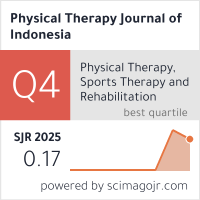
SCImago Journal Rank
Databases & Repositories

Copyright Ownership
Copyright in each published article remains with the Author(s). By submitting a manuscript to PTJI, the author grants the journal the right of first publication under a Creative Commons Attribution 4.0 International (CC BY 4.0) license. This is consistent with the Budapest Open Access Initiative (BOAI) definition of open access.
Authors may separately enter into additional, non-exclusive distribution agreements for the published version — such as depositing it in an institutional repository, publishing it in a book, or sharing it on a personal academic profile — provided that the original publication in PTJI is acknowledged as the source.
Creative Commons Attribution 4.0 International
What the CC BY 4.0 License Allows
Share
Copy and redistribute the content in any medium or format, for any purpose — including commercially — without seeking prior permission from the author or journal.
Adapt
Remix, transform, and build upon the material for any purpose, even commercially. Derivative works may be distributed under any license, provided attribution is given.
ⓘ One Condition: Attribution Required
Users must give appropriate credit to the original author(s) and source (PTJI), provide a link to the CC BY 4.0 license, and indicate if changes were made. Attribution must include:
SHERPA/RoMEO · Green Open Access
Self-Archiving & Repository Policy
PTJI supports Green Open Access. Authors are permitted and encouraged to deposit their work in institutional or public repositories at any stage of the publication process, with the following conditions:
✅ Pre-print (Before Peer Review)
May be posted to any server (e.g., medRxiv, bioRxiv, OSF Preprints) at any time. Must be clearly labeled as a preprint not yet peer-reviewed.
✅ Accepted Manuscript (Post-peer Review)
May be deposited in institutional repositories, personal academic websites, or public archives immediately upon acceptance, with a link to the final published version.
✅ Published Version (Version of Record)
The final, typeset PDF published on ptji.org may be self-archived anywhere immediately upon publication. No embargo period applies.
Author Responsibility
Third-Party Content & Permissions
Authors are solely responsible for obtaining the necessary permissions to reproduce any copyrighted material (figures, tables, images, excerpts) from other sources. Evidence of permission must be provided to the Editor upon request. Failure to obtain proper permissions may result in retraction of the published article.
Figures & Images
Written permission required from the original copyright holder before reproducing any figure or image not created by the author(s). Source must be cited in the caption.
Tables & Data
Reproduction of tables or datasets from other publications requires permission, even when modified. Full attribution including DOI of the original source must be included.
Patient Images
Any image, photograph, or identifying information of a patient requires explicit, written informed consent from the patient or legal guardian, consistent with the Declaration of Helsinki and KEPK requirements.
Crossref · Portico · PKP PN
Digital Preservation & Persistent Identifiers
PTJI is committed to the long-term preservation and discoverability of all published content through internationally recognized archiving and identification systems.
DOI via Crossref
Every published article is assigned a permanent Digital Object Identifier (DOI) through Crossref, ensuring permanent, citable, and machine-readable access to the article.
Portico Archiving
Content is digitally preserved through Portico, a trusted dark archive that guarantees perpetual access even if the journal ceases publication.
PKP Preservation Network
PTJI participates in the PKP Preservation Network (PKP PN), which provides decentralized, distributed archiving of OJS-published content through the LOCKSS program.
ORCID & Author Identification
Authors are encouraged to register and link their ORCID iD to their submission. ORCID provides a persistent digital identifier that distinguishes researchers and connects their work across publications.
Copyright & AI-Generated Content
Content generated by AI tools (e.g., ChatGPT, Gemini, Copilot) is generally not eligible for copyright protection under most jurisdictions, including Indonesian law (UU Hak Cipta No. 28/2014) and international frameworks. Authors who use AI to generate any portion of their manuscript bear full legal and ethical responsibility for the content, and must disclose such use in accordance with PTJI's AI Policy.
PTJI does not accept manuscripts where AI-generated content is presented as original scholarly work without disclosure. Undisclosed AI use may constitute academic misconduct and result in retraction and reporting to the author's institution.
Useful Links
CC BY 4.0
creativecommons.org
SHERPA/RoMEO
Self-archiving policy checker
Crossref
DOI registration
DOAJ
Open access directory
BOAI
Budapest Open Access Initiative
ORCID
Author identifier registry
Governed By
Indexed By
Featured Ranking
SCImago Journal Rank
Databases & Repositories